Having been thinking a lot about the origins of our globally held Dragon mythos in a recent article Reptilicus Infernicus, I couldn’t help but notice the Cthulhu legend was always lurking at the edges of my mind as I was researching the subject matter.
The Enemy at the Gates, the “Other”, forever lurking in the darkness and plotting an invasion most evil and an enslavement most hideous, is probably the original seminal “narrative” that was born when humans first acquired self-awareness and began trying to explain themselves to each other as they sat around their fires built at the mouths of their caves.
These scary “cautionary tales” were not simply the superstitious nonsense of ignorant caveman minds. They served an important purpose. They taught clan members to stick close, to not wander to far from the firelight. Survival depended on creating a fear of the dark. The “invaders at the edge of our world” story has remained deeply imbedded in our human subconscious for the 10,000 years since we left the caves. In modern times, the invasion has become as paranoiac as the paranoid modern man, the invaders becoming “invisible” and walking amongst us:
Who is secretly a space alien in human form? Or a vampire or werewolf? Or a carrier of the spreading Zombie plague?
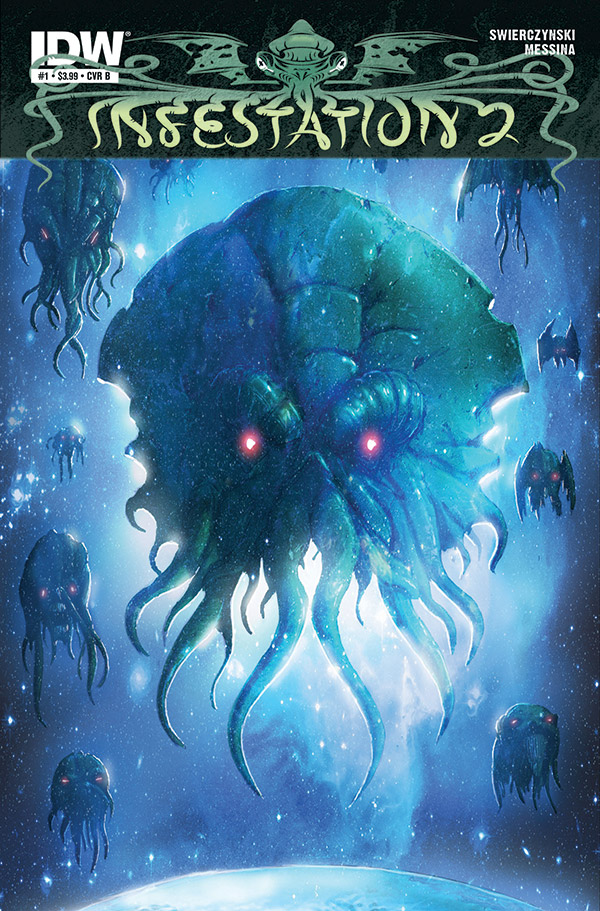
This month IDW Publishing buries the needle on the Mad Mash-Up Meter by unleashing Transformers and Teenage Mutant Ninja Turtles comics titles with storylines mining the Cthulhu Mythos, injecting what's sure to be heart-shocking dose of tentacle fueled intergalactic Lovecraftian menace into both these beloved series.
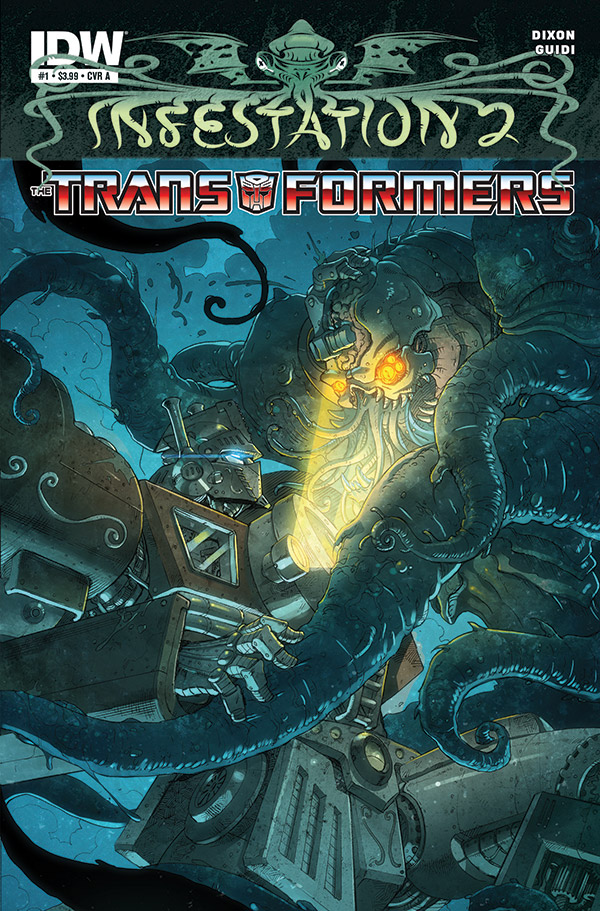
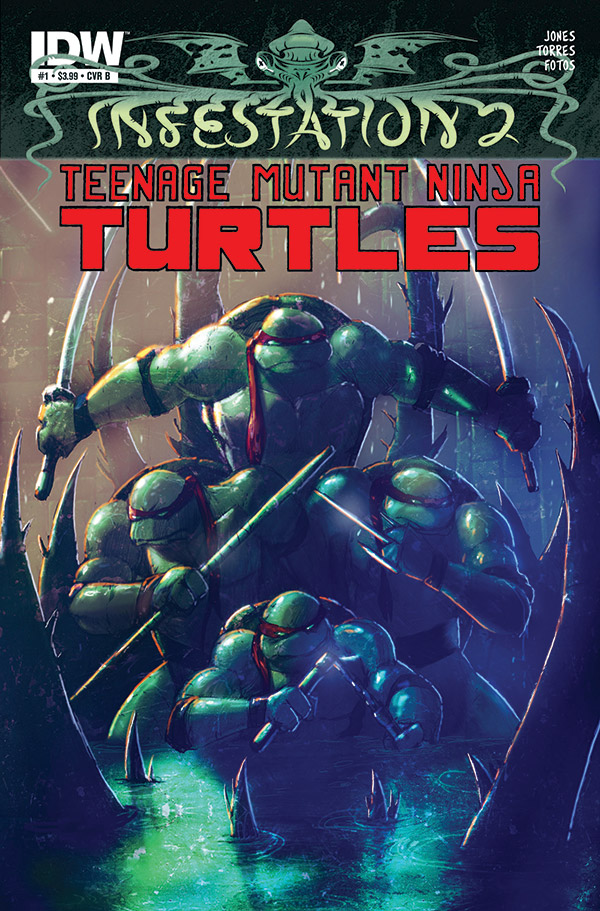
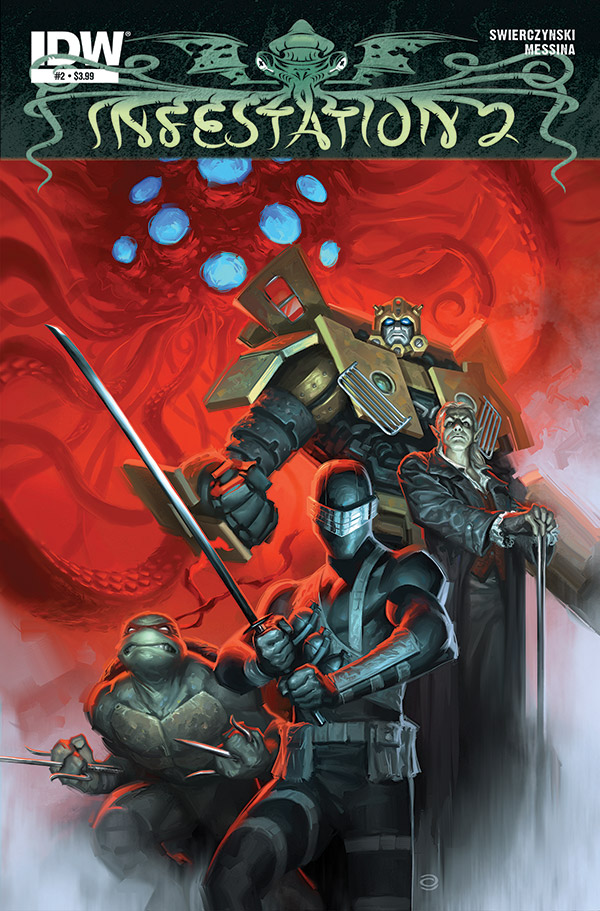
Science fiction and horror literature has long been the most fertile field for paranoid invasion narratives—and one master of all masters stands alone above all the others.
H.P. Lovecraft wrote some of
the greatest horror fiction ever created
during the 1920s and 1930s...
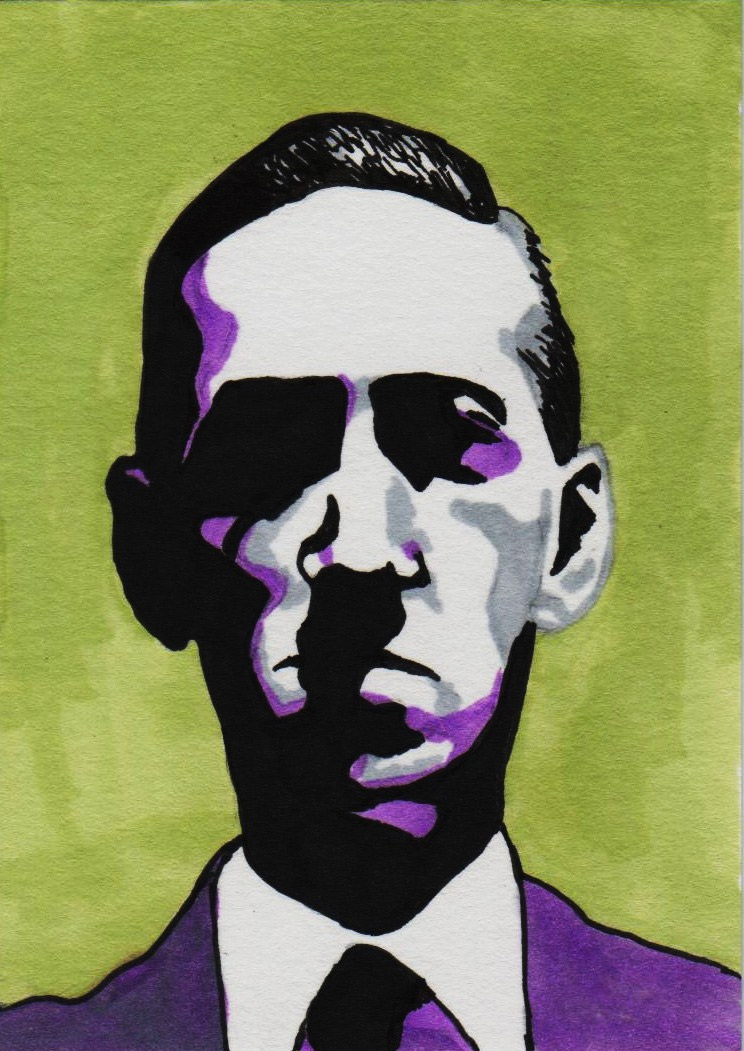
He published in the cheap pulp magazines of the era, including his mostly short story masterpieces that would come to be known collectively as The Cthulhu Mythos. I think the Cthulhu stories are so enduring not only because they are simply the best written and most terrifying of their genre, but because Lovecraft’s overarching narrative so perfectly fits the universal and eternal “lurking invader” paradigm. Cthulhu, one of the Old Ones—gods who once ruled the world but now mostly lie dormant in sunken cities beneath our oceans—is the ultimate invader: not from another land or even another planet, but an invader from beyond our universe.
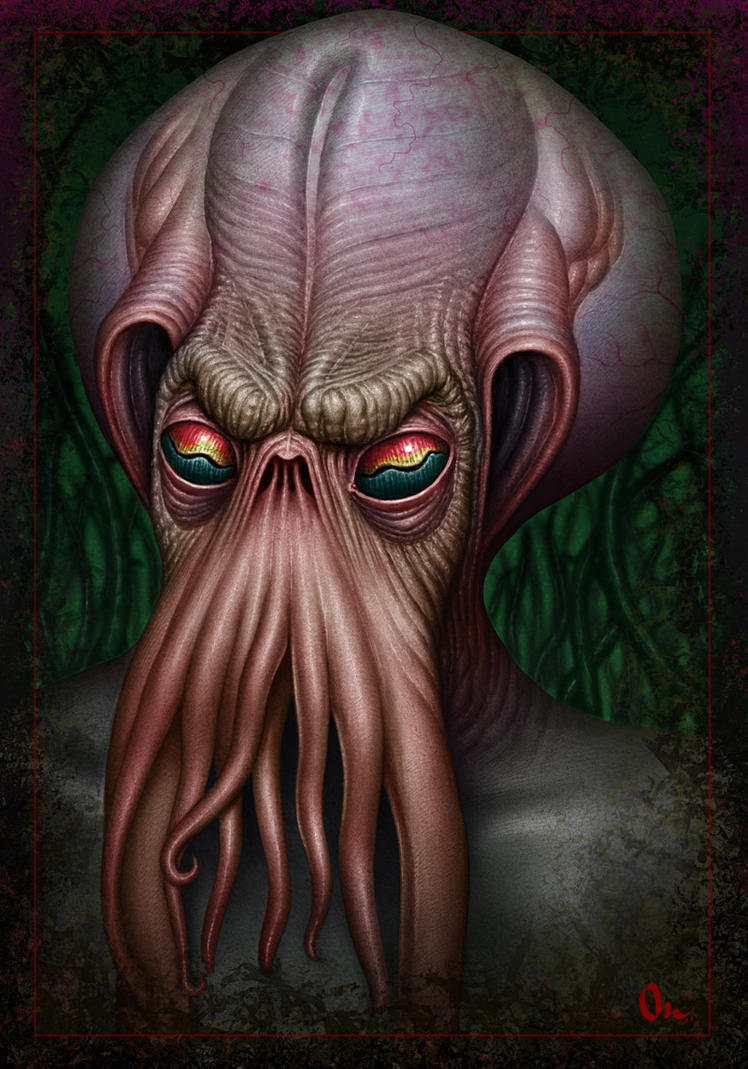
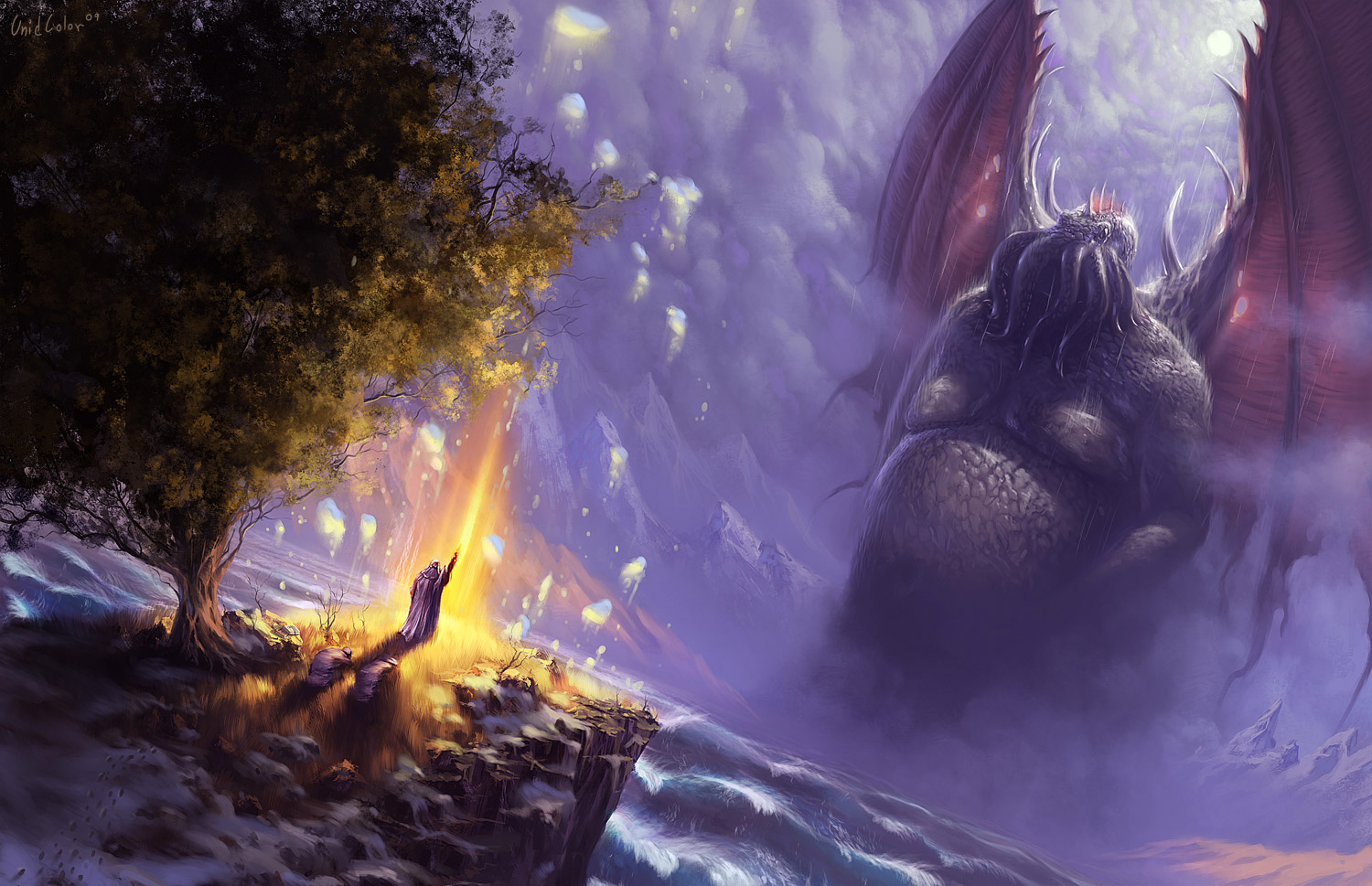
Cthulhu himself has been a favorite of visual artists since his inception, described by H.P. Lovecraft as a sort of enormous intergalactic winged squid-headed deity. Most artists’ renderings of him remind me of the Hindu god, Ganesh—if Ganesh had an octopus head rather than an elephant head. It was a special talent of Lovecraft that he always managed in his writing to lend just enough but not too much detail in describing his shadowy lurkers—just enough to stoke the fires of his readers’ imaginations, making his creations, in their fertile minds, far more horrible than anything he could have rendered with more descriptive illumination.
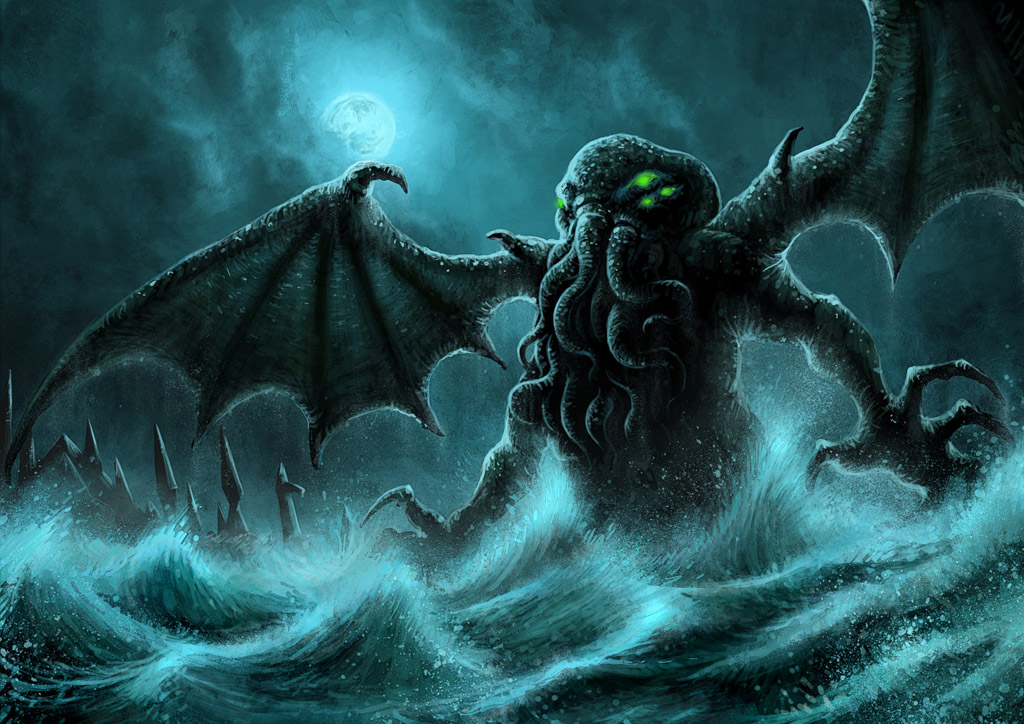
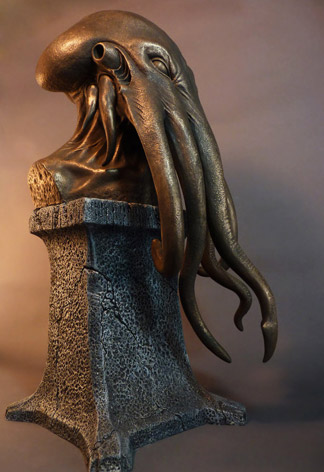
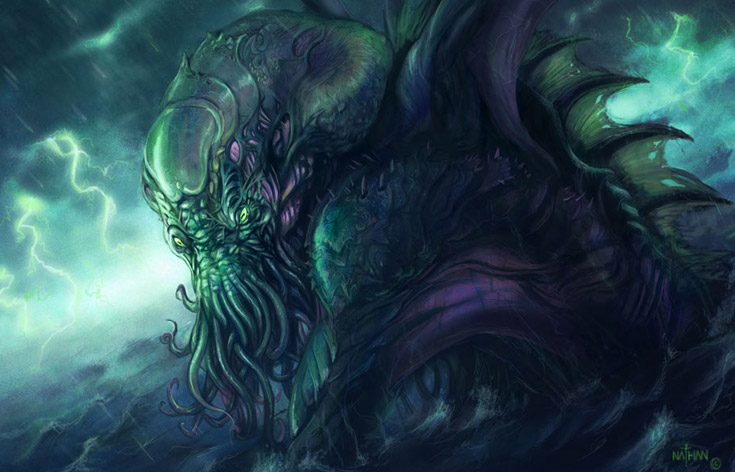
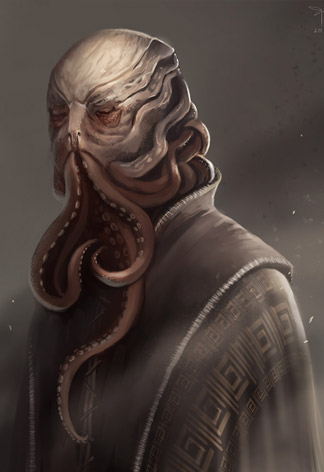
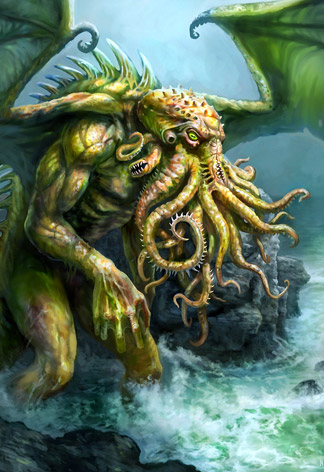
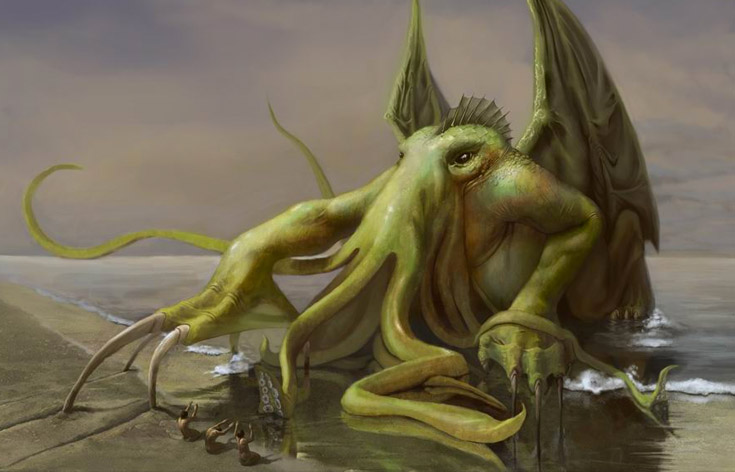
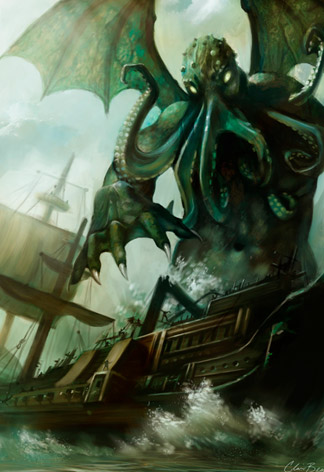
ph'nglui mglw'nafh Cthulhu R'lyeh wgah'nagl fhtagn
Questions for the Reader
- If you have encountered Cthulhu in your literary wanderings, would you agree he is the Elder God supreme monster of all horror lit (and H.P. Lovecraft the supreme horror writer), or are there others you would propose for these Grand Champion of Horror?
- What is it about the god Cthulhu that you think has made him such an enduring subject for artists? Is it merely the aesthetics, the many possibilities, of his simply-limned description by Lovecraft? Or is it the shudder-inducing fearfulness of the stories that are evoked by seeing any depiction of the fiend?
- A cult of Cthulhu “believers” has been born since Lovecraft first created the stories in the 1930s—fans who claim to have become actual acolytes in a very real dark religion. Do you think this sort of thing is all in good fun? Or can it be dangerous? What if the “belief” is in a “good” force rather than an evil one—like the 70,000 Australians who wrote in “Jedi” as their religion on the 2001 national census?
What scares you the most?
- The Great Lord Cthulhu
- Vampires
- Ghosts
- Possession
- Zombies
- Aliens
- A Jedi - Cthulhu War
- Having to spell Cthulhu on command with your life hanging in the balance
- Voldemort casting Imperio on Fluttershy
- Commitment